Dubai Silicon Oasis is one of the places where the Dubai 2040 Urban Master Plan is most visible on the ground. The plan names it as the centre of a new urban hub for science, technology and the digital economy, and new projects announced in 2026 are being designed around that role. For owners, developers and tenants, this changes what gets built in DSO and how projects there are reviewed.
This guide explains what Dubai 2040 means for Dubai Silicon Oasis, the projects announced so far, and what developers and businesses should consider when planning construction, fit-out or expansion in DSO. It focuses on development and approvals rather than company setup.
For help with approvals in DSO and other Dubai jurisdictions, see our authority approval services.
The short answer
The Dubai 2040 Urban Master Plan organises growth around five urban centres, one of which is the Dubai Silicon Oasis Centre for science, technology and the digital economy. The plan expects Dubai's population to grow from about 3.3 million in 2020 to 5.8 million by 2040 and to double green and recreational areas. DSO is a special economic zone under the Dubai Integrated Economic Zones Authority (DIEZ). In January 2026, AED 12.8 billion of expansion projects were launched there, including District IO and Block 14, both described as aligned with Dubai 2040. Developments in DSO need approvals from the zone's authority, plus Civil Defence, DEWA and other entities as the scope requires.
Dubai 2040 in brief
The Dubai 2040 Urban Master Plan is Dubai's long-term framework for land use, transport, green space and population growth. Its main points that matter for developers are:
- Five urban centres: two existing (Deira and Bur Dubai, and Downtown and Business Bay), and three newer centres: Dubai Marina and JBR, Expo 2020 Centre and Dubai Silicon Oasis Centre.
- Population growth from about 3.3 million in 2020 to 5.8 million by 2040.
- Green and recreational areas doubled, with more parks, cycle and walking routes.
- Services and jobs closer to homes, with most daily needs reachable within a short walk or ride.
- Growth around public transport, with higher density near stations.
For the wider planning picture, our article on Dubai Municipality and the 2040 master plan explains how mainland approvals relate to it.
Why DSO is a 2040 urban centre
DSO already combines a technology free zone, residential communities, education and healthcare in one master-planned area. The 2040 plan builds on that mix: the Dubai Silicon Oasis Centre is meant to concentrate science, technology and digital economy activity, with housing, services and transport around it. The aim is a centre where people live, work and study within the same district instead of commuting across the city.
Projects announced in 2026
District IO
District IO is an AED 11 billion project announced in January 2026. Phase one starts in 2026 and phase two in 2027. It includes 25 LEED-compliant buildings, 18 commercial and 4 residential among them, designed to host more than 6,500 companies. The announcement also links it to Dubai's D33 economic agenda and to programmes for testing new products.
Block 14
Block 14 phase one is an AED 1.8 billion project near the planned Dubai Metro Blue Line station in DSO. It follows a transit-oriented development model and is due for completion in 2029, in line with the Blue Line's announced completion.
The Blue Line
The Dubai Metro Blue Line is planned to serve DSO. Transit access changes the economics of nearby plots: higher density, mixed use and reduced reliance on parking all become more realistic near a station.
What this means for developers
- Expect mixed use. Projects that combine offices, labs, homes and retail fit the plan's direction better than single-use buildings.
- Design around transit. Plots near the Blue Line station are likely to favour higher density, active ground floors and pedestrian links.
- Plan for sustainability. District IO's LEED targets set an expectation for new commercial buildings in the area. Energy, water and materials strategies should start at concept stage.
- Provide green and public space. The plan's emphasis on green areas means landscaping and public realm are part of the design, not an add-on.
- Check the plot conditions. Land use, floor area, height and parking for each plot come from the zone's development controls, which may be updated as the 2040 plan is implemented.
Approvals for projects in DSO
DSO is a special economic zone, so building approvals follow the zone's own development control and permit process rather than the standard Dubai Municipality route. A typical project still involves several authorities:
- Plot and development conditions from the zone.
- Concept and detailed design approvals by the zone's planning and engineering team.
- Civil Defence approval of fire and life safety design and inspection at completion. See our DCD approval process guide.
- DEWA approval of loads, substations and connections. See our DEWA approval process guide.
- RTA approvals where access, roads or transit interfaces are affected.
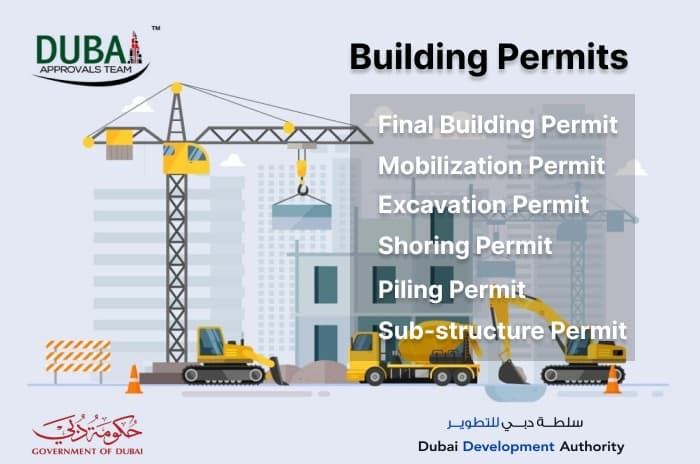
- Building permit, inspections and completion.
If you're not sure which authority regulates your plot, our guide to which authority approves your project in Dubai sets out the jurisdictions.
What this means for tenants and businesses
Businesses moving into DSO's new buildings will mostly deal with fit-out approvals rather than building permits. The usual sequence applies: landlord NOC, fit-out design, the zone's fit-out approval, Civil Defence approval and inspection, and DEWA where loads increase. Technology businesses often have extra requirements, such as server rooms with higher cooling and power loads, labs with ventilation and hazardous materials controls, and clean rooms. Raise these early, because they affect both the landlord's approval and the authorities' reviews.
For company setup questions, our separate guide on what the DSO free zone offers covers licensing and business benefits.
Risks and uncertainties
- Timelines can change. Project phases and the Blue Line completion are announced targets, not guarantees.
- Forecasts are forecasts. Job and GDP figures in announcements are projections.
- Plot rules may evolve. As the 2040 plan is implemented, development controls for some plots may change. Always check the current conditions before design.
A planning checklist for DSO projects
- Get the current plot conditions from the zone.
- Check how the plot relates to the Blue Line and planned public spaces.
- Set sustainability targets at concept stage.
- Plan the mix of uses with the 2040 urban centre role in mind.
- Map the approvals: zone, Civil Defence, DEWA, RTA and others.
- Allow for changes in phasing and infrastructure timing.
Design principles that match the 2040 direction
The plan doesn't replace detailed plot rules, but it sets the direction reviewers and master developers increasingly expect. In practice, designs in DSO that work with the plan share several features:
- Active ground floors. Shops, cafés, lobbies and community uses at street level, rather than blank walls or parking podiums facing the street.
- Shaded pedestrian routes. Covered walkways, trees and arcades that make walking to the metro, schools and services realistic in Dubai's climate.
- Flexible floor plates. Technology tenants change quickly, so floor plates that can switch between offices, labs and studios age better.
- Efficient services. High-performance façades, efficient cooling and metering that supports green building targets.
- Shared amenities. Open spaces, sports facilities and community rooms that serve residents and workers together.
These features also tend to help leasing and long-term value, which is the commercial case for adopting them before they become formal requirements.
Timing your project
Large infrastructure and anchor projects shape the market around them. Developers considering DSO should look at how their delivery date lines up with District IO's phases and the Blue Line. A project completing before the station opens may need more parking and stronger road access in the short term, while a later project can lean further into transit. Building flexibility into parking, for example spaces that can be converted to other uses later, is one way to manage that uncertainty.
Working with the zone authority
Engage the zone's planning team early, especially for larger or mixed-use projects. A pre-concept meeting confirms the current plot conditions, any updates linked to the 2040 plan, and the expected approval sequence. It also flags infrastructure interfaces, such as utility capacity and road access, that can take longer to resolve than the building design itself.
Frequently asked questions
Is Dubai Silicon Oasis part of the Dubai 2040 plan?
Yes. The Dubai Silicon Oasis Centre is one of the plan's five urban centres, focused on science, technology and the digital economy.
Who oversees DSO?
DSO is a special economic zone under the Dubai Integrated Economic Zones Authority.
What is District IO?
An AED 11 billion development in DSO announced in January 2026, with 25 LEED-compliant buildings and phases starting in 2026 and 2027.
Will the Dubai Metro reach DSO?
The planned Blue Line is set to serve DSO, with Block 14 phase one scheduled for completion in 2029 in line with it.
Do DSO projects need Dubai Municipality approval?
DSO follows its own development control and permit process, with Civil Defence, DEWA and other entities involved as required.
What should developers prioritise?
Mixed use, transit access, sustainability and green space, within the current plot conditions.
Planning a project in DSO?
Send us your plot details and brief. We will map the approvals and help align the design with current requirements. You can contact our team here.