Civil Defence is the approval that most often decides when a Dubai building or fit-out can open. It is reviewed twice, once on paper and once on site, and it depends on several other approvals being in place first. When a project misses its handover date, the reason is usually somewhere in the Civil Defence process.
This guide sets out the Dubai Civil Defence (DCD) approval process from start to finish: what needs to be approved before you submit, how the fire and life safety drawings are prepared and reviewed, what happens at inspection, and how the final approval certificate is issued. It applies to new buildings and to fit-outs of offices, shops, restaurants, warehouses and industrial units.
If you want the submissions and inspections managed for you, our Civil Defence approval services cover the full process.
The short answer
The DCD approval process has two halves. First, a registered consultant prepares fire and life safety drawings to the UAE Fire and Life Safety Code of Practice and submits them online to Dubai Civil Defence, after the planning authority's approval is in place. DCD reviews them, issues comments, and approves the design. Second, once the systems are installed, tested and commissioned, DCD inspects the site. When the inspection observations are closed, DCD issues its final approval, which is needed for handover, licensing and operation.
Who is involved in a DCD approval
- The owner or tenant is responsible for the approval and pays the fees.
- The consultant prepares the fire and life safety design, submits it, responds to DCD comments and coordinates inspections. DCD communicates mainly with consultants.
- The fire contractor installs, tests and commissions the systems and prepares the site for inspection, but generally does not submit drawings or answer technical comments.
- The planning authority, such as Dubai Municipality, Trakhees or the Dubai Development Authority, approves the project before DCD will proceed.
Our guide to who handles DCD approval for fit-outs, contractor or consultant explains the split of responsibilities in more detail.
Before you submit: the approvals DCD expects
Civil Defence will not review a project that hasn't cleared the authority that governs the plot. Depending on the location, that means Dubai Municipality, Trakhees, the Dubai Development Authority or a free zone authority. In master communities and leased buildings, the developer or landlord NOC also needs to be in place.
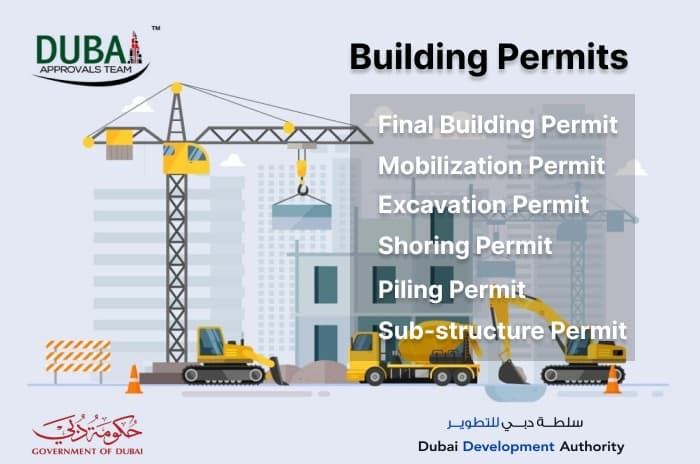
Our guide to the authority approvals needed before a DCD submission sets out what to have ready, and our guide to which authority approves your Dubai project helps you identify the planning authority.
The DCD approval process, step by step
Step 1: Fire and life safety design
The consultant designs the fire and life safety systems to the UAE Fire and Life Safety Code of Practice. The design covers:
- Fire alarm and detection layouts.
- Sprinklers and other firefighting systems, such as hose reels, fire pumps and, for kitchens, suppression systems.
- Emergency exits, escape routes, travel distances and occupancy.
- Emergency lighting and exit signage.
- Smoke control, where the building requires it.
- Fire-rated construction, such as compartments, fire doors and fire stopping.
Step 2: Online submission
The consultant submits the drawings and supporting documents through DCD's online system. A typical submission includes the fire and life safety drawings, a fire and life safety report or strategy, the planning authority approval and, for fit-outs, the base building's approved fire strategy and the landlord NOC.
Step 3: Review and comments
DCD reviews the design against the code and returns comments where needed. The consultant revises and resubmits. Most delays at this stage come from drawings that don't agree with each other, such as an architectural layout that has changed since the sprinkler design was done.
Step 4: Design approval
Once the comments are closed, DCD approves the drawings. The contractor builds and installs to the approved design only. Any change on site needs revised drawings.
Step 5: Installation, testing and commissioning
The fire contractor installs the systems, powers and tests the panels, and completes testing and commissioning. DCD inspects working systems, not installations in progress.
Step 6: Site inspection
The consultant books the inspection. Inspectors check the installed systems against the approved drawings and test their operation. Observations are recorded for correction.
Step 7: Re-inspection and final approval
The contractor corrects the observations, the site is re-inspected if required, and DCD issues the final approval certificate. That certificate supports handover, the completion certificate and the trade licence for the premises. Our guide to DCD inspection and completion certificates covers this stage in depth.
DCD approval for fit-outs
Fit-outs are the most common DCD submissions in Dubai. Every new partition, ceiling or room can change how a space is protected, so a fit-out typically needs:
- Revised sprinkler and detection layouts for the new room arrangement.
- Updated exit routes, travel distances and emergency lighting.
- Kitchen suppression and exhaust details for food premises.
- Confirmation that the design works within the base building's fire strategy.
Restaurants, warehouses and assembly spaces draw the most scrutiny. Our guides to restaurant fit-out approvals and warehouse fit-out approvals explain what DCD looks for in those spaces.
Site readiness checklist for a DCD inspection
- All fire alarm, detection and sprinkler systems installed to the approved drawings.
- Fire alarm panels powered, programmed and tested.
- Sprinkler and pump systems tested, with pressures recorded.
- Emergency lighting and exit signs working.
- Fire doors self-closing and latching, with intact seals.
- Fire stopping complete around services.
- Clear access to all areas the inspector needs to see.
- Testing and commissioning documents and system certificates ready.
An inspection booked before the site is ready produces a list of observations and a second visit, which costs time you could have saved.
How long DCD approval takes
The timeline depends on the project size, how complete the first submission is, how many comment rounds are needed and how quickly the site is ready for inspection. Design review usually runs in parallel with other approvals, while inspection can only start once installation and commissioning are complete. For realistic ranges across authorities, see our Dubai authority approval timeline guide.
Common reasons DCD returns or rejects a submission
- Planning approval missing. DCD expects the planning authority's approval first.
- Drawings out of date. The fire design doesn't match the latest architectural layout.
- Base building strategy ignored. A fit-out design that conflicts with the building's fire strategy.
- Incomplete kitchen details. Missing hood suppression or exhaust information for food premises.
- Systems not commissioned before inspection. Inspectors test working systems.
- Unapproved site changes. Layout changes made on site without revised drawings.
Changes, renewals and existing buildings
DCD approval isn't a one-off for the life of a building. Several situations bring you back to Civil Defence:
- Layout changes. New partitions, rooms or mezzanines change sprinkler coverage, detection and escape routes, so they need revised drawings and inspection.
- Change of use. Turning an office into a restaurant, clinic or storage space changes the fire risk and the systems required.
- Additional occupancy. More people in a space can change exit widths and travel distances.
- System upgrades. Replacing a fire alarm panel or modifying sprinklers needs design approval and testing.
- Maintenance. Fire systems must be maintained by approved companies so that they keep working as approved.
If a previous tenant made changes without approval, those may need regularising before a new fit-out can be approved. Ask for the existing DCD approvals before you sign a lease.
Frequently asked questions
Who submits a DCD application in Dubai?
A registered consultant normally prepares and submits the fire and life safety drawings and handles DCD's comments. The contractor installs and prepares the site for inspection.
Which code does Dubai Civil Defence use?
Designs are prepared to the UAE Fire and Life Safety Code of Practice, applied by Dubai Civil Defence.
Do I need DCD approval for an office fit-out?
Yes, where the fit-out changes the layout, sprinklers, detection, exits or emergency lighting, which almost every fit-out does.
Can I start a DCD submission before the building permit?
DCD expects the planning authority's approval first, so start the fire design early but submit once the planning approval is in place.
What happens if the DCD inspection fails?
DCD records observations. The contractor corrects them, and the site is re-inspected before final approval.
Is DCD approval needed for a trade licence?
For most commercial premises, yes. The final DCD approval is one of the documents needed to complete licensing and start operating.
Do I need new DCD approval when I take over an existing unit?
If you change the layout, the use or the fire systems, yes. Even without changes, check that the previous approvals match what is on site before you start.
Can a fire contractor handle the whole DCD process?
Contractors install, test and prepare the site, but the design submission and technical responses normally sit with a registered consultant, which avoids rejected drawings and repeat inspections.
Planning a DCD submission?
Send us your project location, the planning approval status and your layout. We will confirm what DCD will need, the order to run the approvals and how to get the site ready for inspection first time. You can contact our team here.